

A ball valve that cycles every minute does not need the same actuator decision as a remote tank valve that moves a few times a month. Pneumatic and electric actuators can both automate industrial valves, but the better choice changes with torque or thrust demand, fail position, available plant air, power supply, cycle frequency, and the valve body’s movement type.
Pneumatic actuation makes more sense when clean instrument air is already available, the valve must move quickly, or a spring-return fail-open or fail-closed position is required. Electric actuation becomes easier to justify when running an air line would add more cost than value, when position feedback matters, or when the site already has a suitable electrical supply near the valve.
This guide compares pneumatic vs electric valve actuators from the valve package outward: ball valves, butterfly valves, globe control valves, gate valves, shutdown duty, remote utility service, maintenance access, and hazardous or wet locations. For related selection articles, MacoTango also keeps a set of valve comparison guides.
What pneumatic and electric actuators change in a valve package
The actuator choice decides the energy source, accessory set and failure behaviour of the valve package. A pneumatic valve actuator uses compressed air to move a piston, diaphragm or rack-and-pinion mechanism. Electric valve actuators use a motor, gear reduction and control circuit to turn a shaft or drive a linear stem.
The valve body still sets the mechanical problem. Ball and butterfly valves need quarter-turn torque. Globe valves need controlled linear thrust. Gate valves need enough travel and seating force for open-close duty. The actuator should be sized against breakaway torque, running torque, stroke time, pressure differential and required fail position, not against a light bench movement with no line load.
A pneumatic package may need a solenoid valve, air filter regulator, tubing, positioner and limit switch feedback. An electric package may need local controls, torque switches, wiring, enclosure selection and manual override access. These accessories affect commissioning and maintenance as much as the actuator body itself.
Pneumatic vs electric valve actuators: practical differences
A fast shutdown valve and a slow remote isolation valve should not be judged by the same factor. The useful comparison is how each actuator behaves on the actual valve duty, with the site utilities already known.
| Selection point | Pneumatic actuator | Electric actuator |
|---|---|---|
| Energy source | Compressed air from the plant air system or a local compressor | Electrical supply, control wiring and a suitable enclosure |
| Movement speed | Better for fast open-close action and frequent cycling | Better for slower remote operation or controlled positioning |
| Torque or thrust | Strong output is available from compact rotary or piston designs | Output depends on motor, gearbox and duty rating |
| Fail position | Spring-return designs can move to fail open or fail closed on air loss | Fail action needs battery backup, capacitor return or another engineered method |
| Control and feedback | Positioner, solenoid valve and limit switches are commonly added | Limit switches, torque switches and local controls are built into many packages |
| Installation work | Needs clean air, tubing and air preparation near the valve | Needs cable routing, power protection and control integration |
| Maintenance focus | Air leaks, seals, filters, regulators and positioner calibration | Motor, gearbox, switches, wiring glands and enclosure sealing |
For many industrial valves, fail position is the first hard stop. If the valve must move quickly to fail closed or fail open when control power is lost, a spring-return pneumatic actuator is usually simpler. If the valve mainly stays in one position and needs remote operation with position feedback, electric actuation can be the cleaner package.
This table should screen the options, not replace actuator sizing. A quarter-turn valve still needs torque margin for breakaway and pressure differential. A linear control valve still needs enough thrust to seat, unseat and modulate without hunting.
When pneumatic actuation is the safer or simpler choice
Pneumatic actuation is strongest when clean instrument air is already available and the valve needs quick, repeatable movement. A pneumatic valve actuator is a natural fit for high-cycle ball valves, butterfly valves, shutdown valves and process lines where spring-return fail open or fail closed behaviour is required.
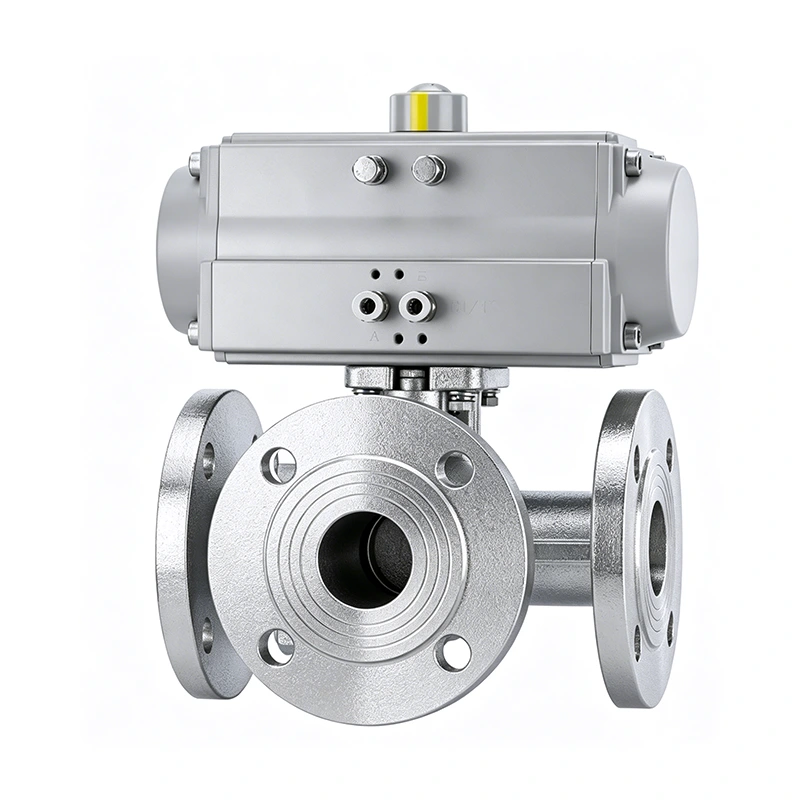
A spring-return pneumatic actuator can move the valve when pressure in its working chamber is released, provided the spring has enough force or torque for the required load. Loss of air supply, loss of the command signal, and solenoid de-energization need separate checks against the actual air circuit and device configuration. For example, a fuel, steam, chemical dosing or tank inlet valve may need to close without waiting for an electrical backup system. In that kind of duty, the fail action should be decided before the actuator model is priced.
Pneumatic packages also suit compact quarter-turn valves when plant air is stable and maintenance teams already understand air preparation. The main risk is poor air quality. Water, oil, dirt, undersized tubing or a blocked exhaust can make a good actuator look weak in service. For modulating duty, the positioner and air supply need the same attention as the actuator torque.
Hazardous areas do not make pneumatic selection automatic. The actuator may use air as the moving power, but solenoid valves, limit switches and positioners still need the correct electrical rating for the site. If the buyer is still comparing spring-return, double-acting and rack-and-pinion designs, MacoTango’s guide to pneumatic actuator types gives the detailed mechanism background.
When electric actuation is the better fit
Electric actuation becomes easier to justify when power is already available near the valve and compressed air would be the new utility. This is common on remote tank farms, water treatment skids, HVAC and utility lines, and isolation valves that move a few times per shift or only during batch changes.
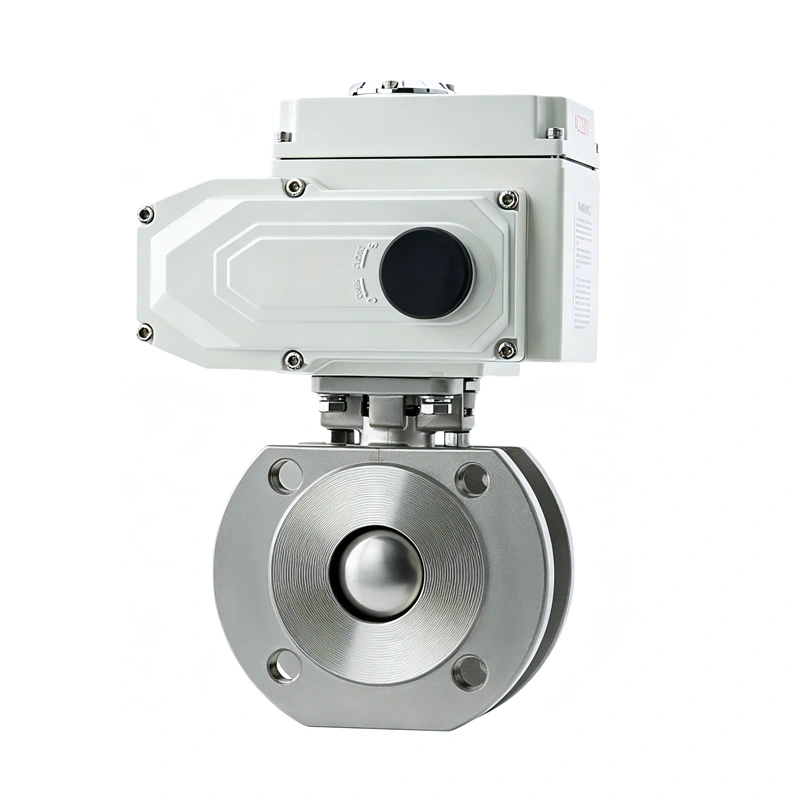
An electric actuator can put the motor, gearbox, limit switches, torque switches, local hand operation and position indication into one package. That helps when operators need open-close feedback at a control panel or when cable routing is simpler than installing air lines, filters and regulators. For modulating duty, check the actuator duty rating and control resolution instead of assuming any electric model can position continuously.
Electric valve actuators are usually a poor match for very fast emergency movement unless the fail action is engineered separately. If the valve must move on power loss, the package may need battery backup, capacitor return, a spring-return electric design, or a different actuator type. The safe position belongs in the specification before voltage, enclosure and torque output are chosen.
Outdoor and washdown services also need more than a motor size check. Confirm voltage, ingress protection, cable gland sealing, manual override access and ambient temperature. For globe control valves or actuated packages in MacoTango’s control valve series, the actuator choice should be checked against stroke, thrust, control signal and shut-off requirement.
Match actuator type to valve body, torque, stroke and fail position
The valve body decides the actuator problem before the power source does. Pneumatic and electric actuators can both move an industrial valve, but they are sized against different loads: rotary torque for ball and butterfly valves, linear thrust for globe valves, and travel plus seating force for gate valves.
| Valve body | Actuator movement | Sizing check | Fail-position note |
|---|---|---|---|
| Ball valve | Quarter-turn pneumatic or electric actuator | Breakaway torque, seat material, pressure differential and media build-up | Fail closed for isolation, fail open only when the process requires flow relief |
| Butterfly valve | Quarter-turn actuator with enough disc torque margin | Valve size, pressure drop, rubber or metal seat friction and closing speed | Check liquid lines for water hammer risk if the valve closes quickly |
| Globe control valve | Linear pneumatic, electric or electro-hydraulic control valve actuator | Stem thrust, packing friction, trim balance, shut-off class and control signal | Fail open or fail closed should follow the process hazard, not actuator cost |
| Gate valve | Multi-turn electric actuator or linear actuator package | Full travel, stem thrust, seating force, hand operation and travel time | Many remote isolation duties use fail in last position unless the system requires a driven fail action |
Use the table as a first sizing screen. A DN150 butterfly valve with high pressure differential may need a much larger actuator than its nominal size suggests, while a small ball valve with sticky media may have high breakaway torque after sitting closed. For quarter-turn valves, also check the mounting flange, drive coupling, stem square and bracket stiffness before treating the actuator and valve as a matched package.
Ball valve automation has its own selection details because soft seats, full-bore designs and shutdown duty can change the torque margin. MacoTango covers that narrower comparison in its guide to pneumatic vs electric actuated ball valves.
Installed cost, air supply and maintenance reality
A low actuator price can disappear once the plant has to add air piping, an air filter regulator, a dryer, tubing, fittings and commissioning time. Pneumatic actuation is economical when clean instrument air is already available at the valve area. It becomes less practical when the actuator is remote and the site has to build a small air system only for a few valves.
Compressed air also has an operating cost after installation. Leaks, pressure drop, wet air and undersized tubing can make a pneumatic actuator slower or weaker than it looked during factory testing. The US Department of Energy treats compressed air system performance as an energy and maintenance issue, not a minor utility detail.
Electric actuation shifts the cost to cable routing, local isolators, protection devices, control wiring, enclosure selection and spare motors or switches. It may be cheaper to install on a remote valve where power is already present, but it can cost more if the site needs explosion-proof equipment, long cable runs, weatherproof junction boxes or a backup system for fail action.
Maintenance teams should compare the fault they are most likely to face. Pneumatic packages bring air leaks, seal wear, filter blockage, regulator drift and positioner calibration. Electric packages bring water ingress, loose terminals, torque-switch trips, gearbox wear and motor failure. A cost comparison is incomplete if it ignores the time needed to diagnose the actuator when the valve is stuck half open or fails to reach its limit switch.
Hazardous, wet and outdoor service checks
Fail position should be decided before the actuator model is priced. A shutdown valve in a fuel line may need to fail closed when air or power is lost, while a cooling-water bypass may need a different failure position to protect equipment. Pneumatic spring-return actuators give a clear mechanical fail action, but double-acting pneumatic actuators and many electric actuators will hold or stop unless the package includes stored energy, a spring module, battery backup or another fail-safe device.
Hazardous areas need the actuator, solenoid valve, limit switch, positioner, cable gland and junction box checked as one package. A pneumatic actuator body may have no motor, but its electrical accessories can still need hazardous-area certification. Electric valve actuators must match the site classification, gas or dust group, temperature class and enclosure requirements. The IECEx certified equipment scheme is one recognised route for equipment used in explosive atmospheres, but the project specification should still name the exact approval required.
Outdoor and washdown service bring different failures. Rainwater can enter through a loose cable gland, conduit thread or cracked indicator cover. Condensation can collect inside an electric actuator enclosure when day and night temperatures swing. Pneumatic packages have their own exposure points: wet instrument air, frozen condensate, corroded tubing, blocked exhaust ports and damaged filter bowls.
In coastal, chemical or wastewater areas, check bracket material, fasteners, actuator coating, shaft seals and manual override access. A valve can have the correct body material and still suffer actuator problems if the mounting kit corrodes or the local position indicator fills with water. The actuator data sheet should be reviewed against the actual installation position, not only the valve size and torque.
Selection mistakes that cause actuator problems
Many actuator problems in service start with a sizing or duty assumption made before purchase. A valve may feel easy by hand on a bench and still need more torque or thrust once pressure differential, seat friction, media build-up and site temperature are added.
- Do not size a pneumatic or electric actuator only by nominal valve size. A small ball valve with sticky media can need more breakaway torque than a larger clean-water valve.
- Check the valve movement before choosing the actuator. Quarter-turn ball and butterfly valves, linear globe valves and multi-turn gate valves need different actuator mechanisms.
- Do not treat fail position as an accessory detail. Fail open, fail closed and fail in last position change the actuator type, spring size, air volume, wiring and control logic.
- Check cycle frequency and duty rating. An actuator that works for a monthly isolation valve may overheat, wear seals or lose position accuracy on a high-cycle service.
- Do not assume the site utility is suitable. Low air pressure, wet air, voltage drop, unstable power and long cable runs can all make a correctly sized actuator behave badly.
- Leave access for manual override, limit switch setting, position indicator reading and local isolation. A valve package that cannot be reached safely is harder to commission and slower to repair.
The safest check is to compare the actuator data sheet against the valve torque curve, maximum pressure differential, stroke time, fail action and available site utilities before the valve package is released for production. For control-valve load and assembly checks, use the control valve actuator selection guide.
Check the valve duty before choosing the actuator
If two actuator options still look equal, review the failure condition first. The actuator should support what the valve must do when air pressure drops, power is lost, the control signal fails or the process reaches a shutdown condition. That decision usually matters more than whether the actuator is pneumatic or electric on paper. The fail-position guide separates air, power, and signal failures for the complete valve package.
For a new actuated valve package or a replacement actuator, compare the valve type, size, medium, pressure differential, temperature, stroke time, cycle frequency, control signal, feedback requirement and fail position before ordering. MacoTango can review these details with the valve body and actuator accessories together, so the package is sized around the real duty instead of a catalogue assumption.
If the project has a special fail action, hazardous-area approval, outdoor enclosure requirement or high-cycle service, contact MacoTango before finalising the actuator model. It is easier to correct the actuator margin, solenoid choice, limit feedback and manual override access before production than after the valve is installed in the line.