

Three-way control valves are integral components in industrial systems, facilitating precise regulation of fluid flows. Their ability to either mix or divert flows makes them indispensable in applications ranging from HVAC systems to chemical processing. However, understanding the distinction between converging (mixing) and diverging (diverting) flow types is crucial. Incorrect selection or installation of these valves can lead to system inefficiencies, control failures, and potential damage to equipment.
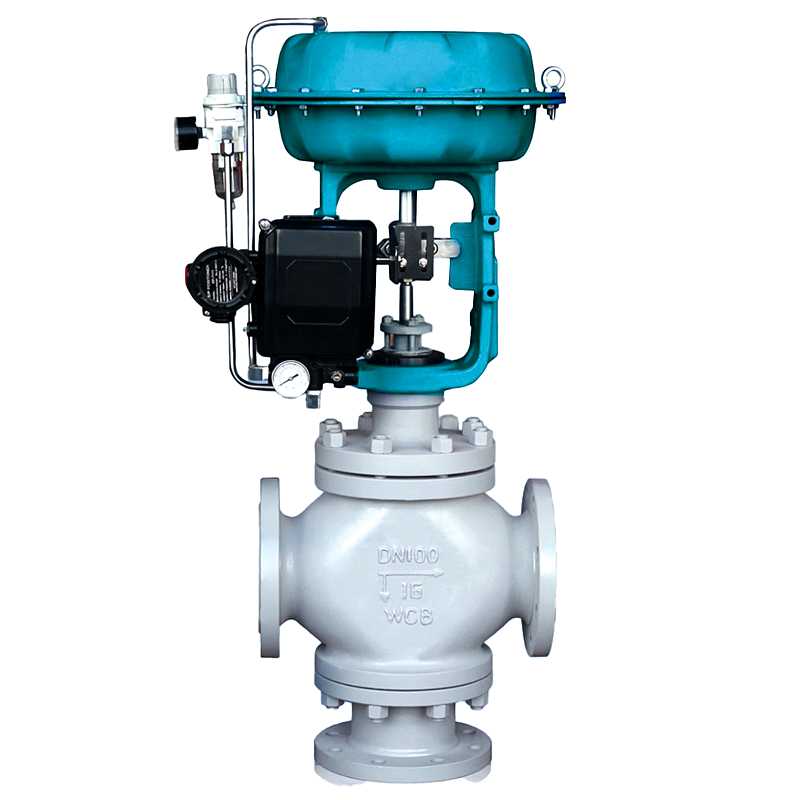
What is a Three-Way Control Valve? Core Functionality
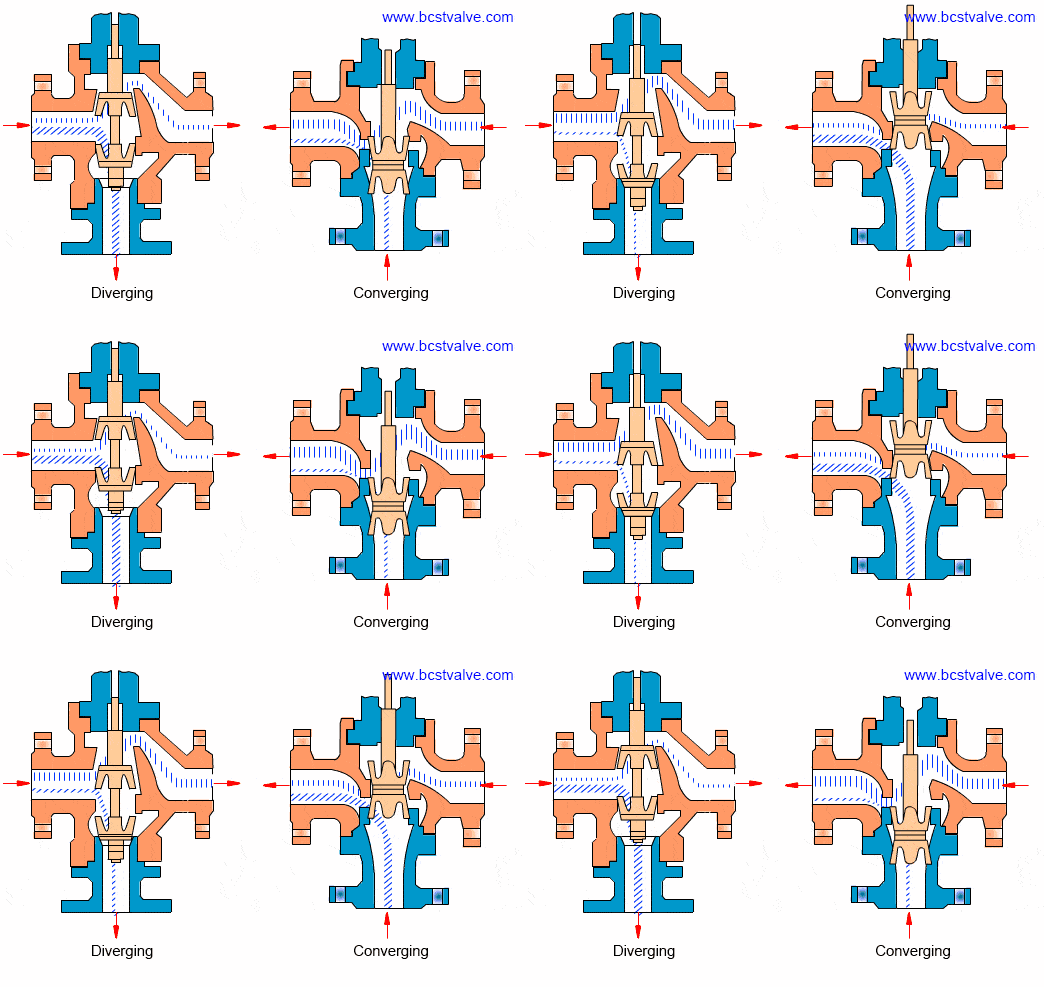
Source: bcstvalve
A three-way control valve is a pivotal component in fluid systems, designed to manage the flow of liquids or gases through three distinct ports: two inlets and one outlet, or vice versa. This configuration allows for versatile control over fluid dynamics, enabling either the mixing of two streams into one or the splitting of a single stream into two.
Mixing (Converging) Flow
In mixing applications, two separate fluid streams enter the valve through individual inlets and combine within the valve body before exiting through a common outlet. This is commonly used in systems requiring the blending of fluids, such as adjusting the temperature by mixing hot and cold water.
Diverting (Diverging) Flow
Conversely, in diverting applications, a single fluid stream enters the valve through a common inlet and is distributed between two outlets according to the valve design and position. This function is essential in systems that need to redirect flow to different paths, such as distributing heated water to multiple locations.
Understanding Converging Flow (Mixing Valve)
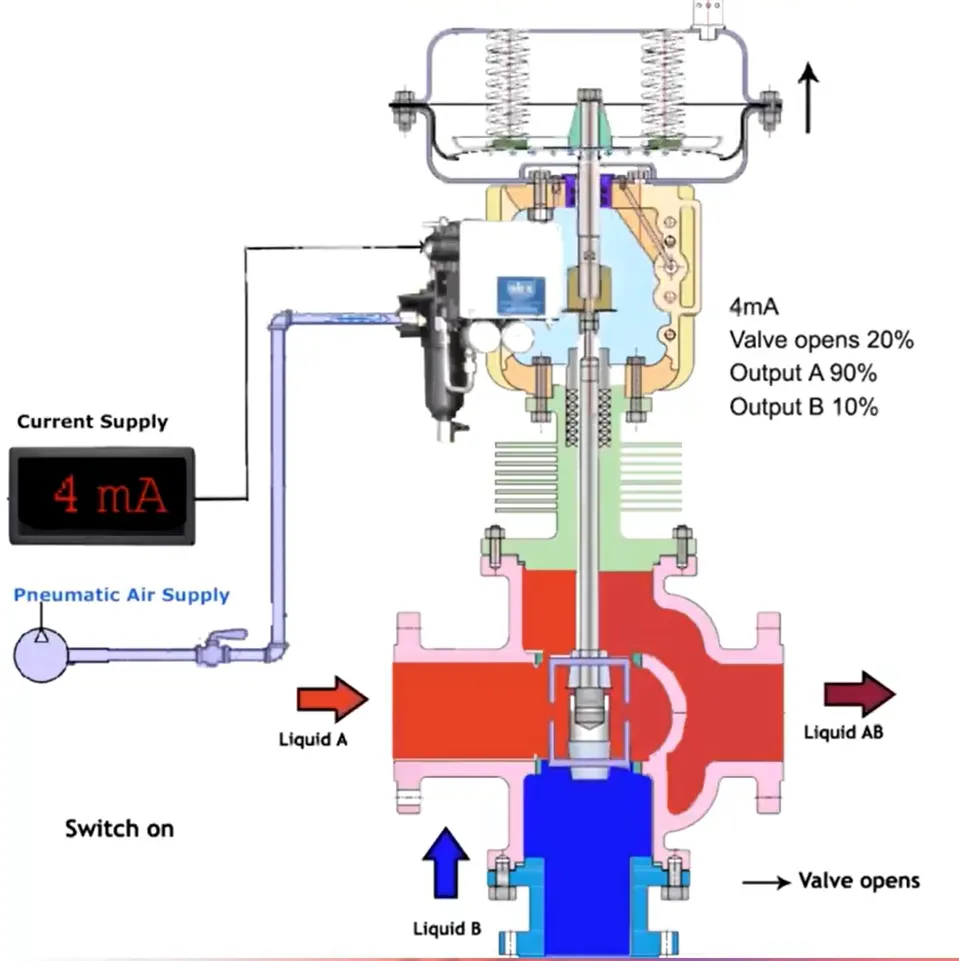
How Converging Flow Works
A three-way mixing valve is engineered to blend two separate fluid streams into a single, controlled output. This is achieved through two inlet ports—commonly labeled A and B—and one common outlet port, often denoted as AB. The valve’s internal plug modulates the flow from each inlet, adjusting the proportions to achieve the desired mixture at the outlet. This design is particularly effective in applications where precise control over the mixture’s temperature, pressure, or chemical composition is essential.
Key Applications for Converging Flow
Temperature Control: In HVAC systems, mixing valves combine hot and cold water to maintain a consistent temperature for heating or cooling purposes.
Concentration Control: In chemical processing, these valves blend different chemical streams to achieve a specific concentration, ensuring the desired chemical reactions occur efficiently.
Maintaining Constant Flow: A mixing valve can vary the contribution from each inlet, but constant total flow is not guaranteed by the valve alone. Total flow also depends on branch pressures, circuit resistance and the control arrangement.
Visualizing the Flow Path
In a three-way globe mixing valve, one actuator moves a plug that changes the openings of both inlet paths. The two branch flows are therefore coupled; they are not independently controlled by that single actuator. The outlet temperature or concentration depends on the inlet conditions and actual branch flows. Achieving a specified blend requires a suitable circuit, adequate valve capacity and the required process measurement and control loop; plug movement alone does not guarantee the result.
Understanding Diverging Flow (Diverting Valve)

How Diverging Flow Works
A diverting valve, also known as a diverter valve, is designed with one common inlet port (typically labeled AB) and two outlet ports (labeled A and B). The valve’s internal mechanism changes the available flow area to each outlet. In a modulating diverting design, both paths may be partly open at intermediate positions. This redirection allows for the splitting of a single fluid stream into two separate paths, facilitating control over the distribution of the fluid within a system.
Key Applications for Diverging Flow
Flow Diversion: Diverting valves are commonly used to direct fluid to different processing lines or tanks, enabling flexible routing within industrial systems.
Temperature Control: In thermal systems, diverting valves can send fluid to a cooler or bypass, maintaining desired temperatures in various parts of the system.
System Selection: A suitable valve can select between primary and standby flow paths. Continuous service during transfer depends on the permitted valve positions, any overlap or interruption between paths, branch isolation and the system interlocks. A three-port body alone does not establish uninterrupted transfer or redundancy.
Visualizing the Flow Path
Internally, the diverting valve’s plug or ball changes the connection between the common inlet and the two branches. AB, A and B are one common labeling convention; the supplied valve drawing defines the actual ports. At an end position, one path may be shut while the other is open; at intermediate positions, a modulating design can pass flow through both. Shutoff performance depends on the specified trim and leakage requirement. This selective opening and closing of ports control the direction of the fluid flow, allowing for precise management of the fluid’s path within the system.
How to Identify Converging vs. Diverging Valves (Practical Guide)
Identifying whether a three-way valve is converging (mixing) or diverging (diverting) is crucial for ensuring proper system functionality. Misidentification can lead to operational inefficiencies or system failures. Here are three practical methods to accurately determine the valve type:
Method 1: Interpreting Valve Body Markings (Arrows & Letters)
Manufacturers often mark the valve body to indicate flow direction:
Arrows: Look for cast or engraved arrows near the ports.
Port Labels: Common labels include:
AB: Common port: outlet in mixing duty, inlet in diverting duty
A, B: Branch ports: inlets in mixing duty, outlets in diverting duty
Converging (Mixing):
Arrows pointing into the AB port from A and B
Diverging (Diverting):
Arrows pointing out of the AB port towards A and B
These examples use the AB/A/B convention. Other port labels are used, including in MacoTango drawings. Confirm the actual flow arrows, port diagram and permitted duty for the supplied configuration; letters alone do not establish the flow direction.
Method 2: Checking the Valve Nameplate
The nameplate provides essential information:
Flow Type: Some nameplates specify the flow type directly, using terms like:
“Converging”
“Diverging”
“Mixing”
“Diverting”
Model Codes: Specific model numbers or codes can indicate the valve’s function.
Use the nameplate to identify the supplied valve and obtain its matching port drawing, trim details and operating limits. A family name or model code alone may not establish the permitted flow direction. Confirm the actual connections and approved mixing or diverting duty against the supplied documentation before installation.
Method 3: Consulting Documentation (When in Doubt)
If markings are unclear or absent:
Installation Manuals: Provide detailed information about the valve’s function.
Datasheets: Contain specifications and flow directions.
P&IDs (Piping and Instrumentation Diagrams): Illustrate the valve’s role within the system.
Key Differences Summarized: Converging vs. Diverging
Understanding the distinctions between converging (mixing) and diverging (diverting) three-way control valves is essential for selecting the appropriate valve for specific applications. Below is a concise comparison to highlight their key differences:
Flow Direction
Converging (Mixing): Two inlets (A and B) combine to flow into a single outlet (AB).
Diverging (Diverting): One inlet (AB) splits into two outlets (A and B).
Primary Function
Converging (Mixing): Blends two fluid streams into one, achieving desired properties such as temperature or concentration.
Diverging (Diverting): Diverts a single fluid stream into two separate paths, directing flow to different destinations.
Plug Design
Converging (Mixing): In a three-way globe valve, the plug and seats must be arranged for the specified two-inlet, common-outlet flow. A T-port label is not a general definition of a mixing control valve.
Diverging (Diverting): In a three-way globe valve, the trim must suit one inlet feeding two outlet paths. T-port and L-port describe ball-valve passage patterns; neither label alone proves suitability for modulating diverting duty.
For ball-valve passage patterns and stop positions, see the three-way valve flow-path guide. Use the supplied position chart to establish which connections are open at each permitted position.
Typical Applications
| Application Type | Converging (Mixing) | Diverging (Diverting) |
|---|---|---|
| Temperature Control | Mixing hot and cold water for HVAC systems | Diverting heated water to different zones |
| Chemical Processing | Blending chemicals to achieve desired concentration | Diverting chemical flow to multiple reactors |
| Flow Distribution | Combining flows from two sources into one | Splitting flow from one source to multiple destinations |
These distinctions are crucial for ensuring that the selected valve meets the specific requirements of the application, leading to optimal system performance.
Check the flow path at each operating state
Mark the common connection and both branches on the process schematic, then compare them with the supplied valve port drawing. Check normal operation, startup, bypass operation and each specified loss of air, power or signal. For a three-way valve, write down which flow path must remain open or closed after each failure; a single “fail open” label can be ambiguous.
For minimum, normal and maximum duty, record the pressures, flows and temperatures that coexist at each actual operating state. Do not combine unrelated pressure or flow extremes into a supposed operating point. Use the supplied drawing to map the common port and branches; A, B and AB are examples of labels, not a universal convention.
Mixing: For the same operating state, provide the pressure and flow at each inlet, the common outlet pressure, and both inlet temperatures where temperature blending matters. Review the pressure difference from each inlet to the common outlet separately.
Diverting: For the same operating state, provide the common inlet pressure, the downstream pressure and required flow in each branch. Review the pressure difference along each outlet path, including the circuit conditions during bypass or transfer.
Check both paths across the required travel and pressure range. A mid-travel position does not establish an equal flow split, and complementary opening or capacity curves do not guarantee constant total flow. Branch resistance and available pressure difference also affect the result. Ask the supplier to confirm the selected trim, capacity and permitted differential pressure for the documented operating states.
For each specified loss of air, power or signal, name the required open and closed port pairs and any leakage limit. Then check whether the actual actuator and accessories provide that arrangement. The failure-event comparison explains why those events may produce different responses. Do not use a single “fail open” label as a substitute for the required three-way flow path.
For a steam-heated exchanger, mark whether the three-way valve handles the secondary liquid or the steam. A liquid-side bypass does not itself establish steam-side drainage conditions. Check the steam-side load and condensate-drainage conditions alongside the liquid circuit before selecting the arrangement.
Compare the MacoTango three-way globe control valve with the required flow diagram. Use the datasheet guide to organize operating cases and attach the marked schematic for review.