

ASTM A216/A216M Grade WCB, UNS J03002, is a cast carbon steel used for pressure-containing parts such as valve bodies and bonnets. The grade has a specified tensile strength of 485 to 655 MPa, a minimum yield strength of 250 MPa, and a minimum elongation of 22%.
WCB is a material grade, not a valve pressure class. A WCB body marking does not identify the trim, stem, seat, packing, gasket, bolting, coating, pressure rating, heat-treatment record, or inspection scope of the finished valve.
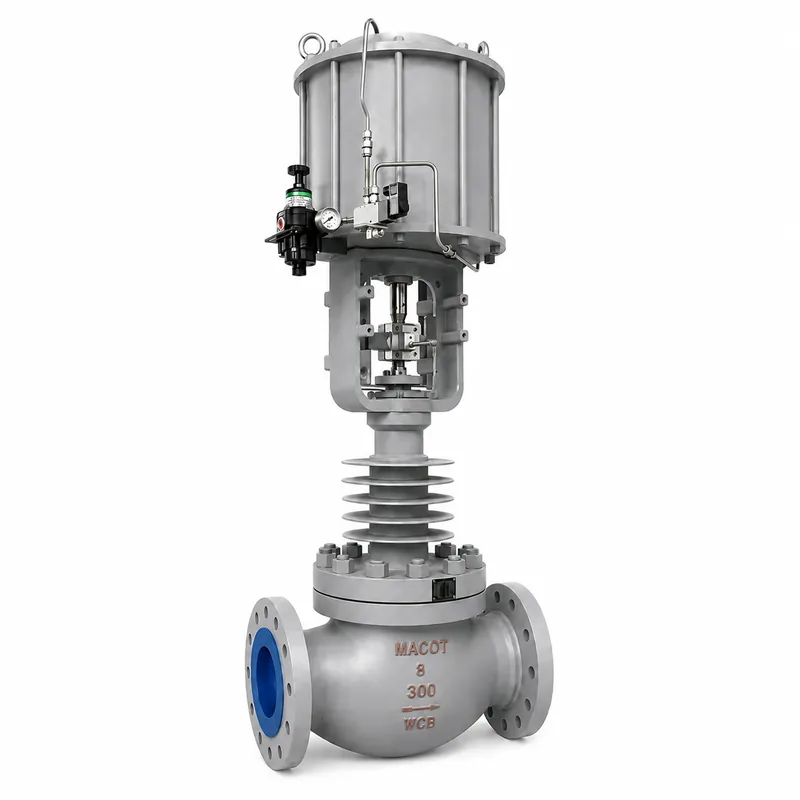
WCB material at a glance
The figures below are specification values for the grade. They are not substitutes for the actual heat analysis and tensile results on the material test certificate.
| Item | WCB data or requirement | Practical meaning |
|---|---|---|
| Material designation | ASTM A216/A216M Grade WCB | Specify the complete designation, not only “carbon steel” |
| Product form | Steel casting | Do not describe WCB as wrought or forged steel |
| UNS number | J03002 | Useful for identification, but not a complete valve specification |
| Tensile strength | 485 to 655 MPa | Verify the heat-specific result on the MTC |
| Yield strength | 250 MPa minimum | Does not determine the valve pressure rating by itself |
| Common temperature shorthand | About -29 to 425 °C | Confirm MDMT, design code and pressure-temperature rating |
The official ASTM A216/A216M specification page identifies the grade as a steel casting for pressure-containing service. It also states that the casting is suitable for fusion welding, subject to the specified welding controls.
What does WCB stand for?
The safe formal answer is ASTM A216/A216M Grade WCB cast carbon steel. Industry references often expand WCB as “weldable cast steel, grade B” or “weldable carbon steel, grade B”, but the public ASTM scope names Grade WCB without giving a normative letter-by-letter expansion.
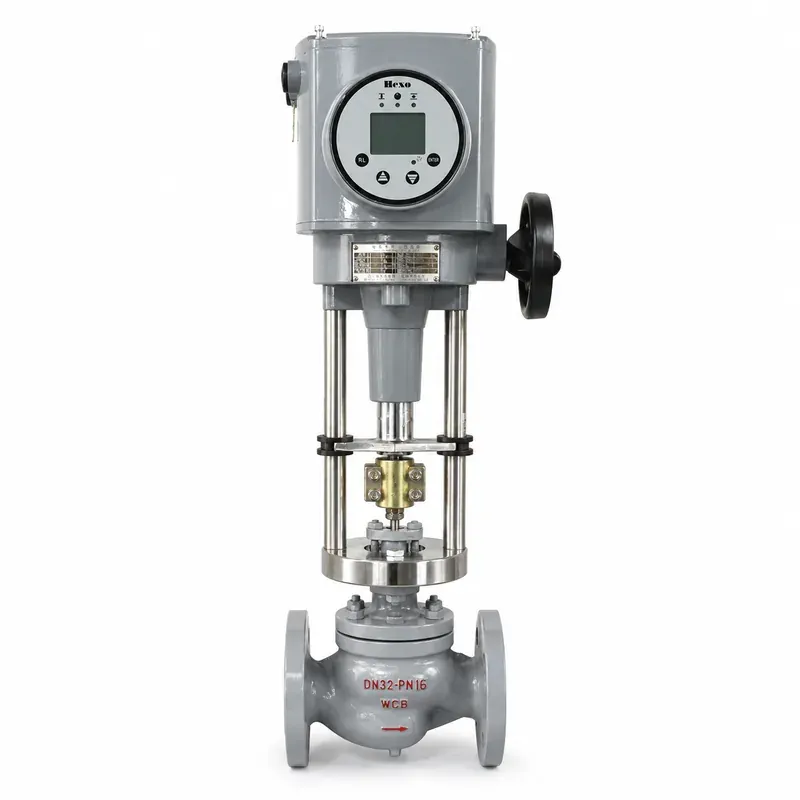
A forged carbon steel valve component is normally specified under a different material standard, such as ASTM A105, when that standard and product form apply. WCB should therefore not be described as “wrought carbon steel”.
The grade marking also has a narrow meaning. A cast body marked WCB confirms the stated body material only when the marking is traceable to the correct heat and certificate. It does not prove that the complete valve meets a particular pressure class, low-temperature requirement, sour-service requirement, or project specification.
ASTM A216 WCB chemical composition
ASTM A216 controls maximum chemical limits rather than a single target recipe. The foundry may produce a heat below these limits, and the actual values should appear on the MTC.
| Element | Maximum, % | Why it is checked |
|---|---|---|
| Carbon, C | 0.30 | Strength, hardenability and weldability |
| Manganese, Mn | 1.00 base limit | Strength and deoxidation |
| Silicon, Si | 0.60 | Deoxidation and casting practice |
| Phosphorus, P | 0.035 | Ductility and toughness control |
| Sulphur, S | 0.035 | Ductility and weldability control |
| Copper, Cu | 0.30 | Residual-element control |
| Nickel, Ni | 0.50 | Residual-element control |
| Chromium, Cr | 0.50 | Residual-element control |
| Molybdenum, Mo | 0.20 | Residual-element control |
| Vanadium, V | 0.03 | Residual-element control |
| Cu + Ni + Cr + Mo + V | 1.00 total | Combined residual-element limit |
The manganese limit needs one qualification. For each 0.01 percentage point reduction in carbon below the 0.30% maximum, the specification permits a 0.04 percentage point increase in manganese, up to 1.28% for WCB. An MTC can therefore show manganese above 1.00% without automatically indicating nonconformity.
These values do not make WCB corrosion resistant. Fluid chemistry, concentration, temperature, velocity, solids, start-up chemicals and cleaning media still control material compatibility.
WCB mechanical properties
The mechanical requirements apply to test specimens associated with the casting heat and heat-treatment condition. They do not provide a universal hardness value, impact value, valve wall thickness, or maximum allowable working pressure.
| Property | ASTM A216 Grade WCB requirement | What it does not prove |
|---|---|---|
| Tensile strength | 485 to 655 MPa, 70 to 95 ksi | Finished-valve pressure rating |
| Yield strength | 250 MPa, 36 ksi minimum | Suitability at every temperature |
| Elongation in 50 mm | 22% minimum | Low-temperature impact performance |
| Reduction of area | 35% minimum | Casting soundness or NDE acceptance |
ASTM A216 does not assign one mandatory hardness or Charpy impact value to every WCB valve body. If a project requires hardness limits, impact testing, radiography, ultrasonic examination, magnetic-particle examination, or liquid-penetrant examination, those requirements must be stated through the applicable code, supplementary requirements and purchase documents.
Pressure capacity comes from the material group, pressure-temperature rating, body and bonnet design, wall thickness, end connection, manufacturing quality and applicable valve standard. Coupon strength alone cannot establish the MAWP of a finished valve.
Heat treatment, weldability and WCB welding rods
WCB castings are supplied in an annealed, normalised, or normalised and tempered condition, as appropriate to the specification and order. Heat treatment reduces casting stresses and develops the required mechanical properties. The MTC should state the actual heat-treatment condition rather than leaving it as a generic material claim.
WCB is weldable, but the procedure still controls the result
ASTM A216 describes these castings as suitable for fusion welding. That statement does not authorise an uncontrolled casting repair, field weld, or attachment weld. Procedure and personnel qualification for steel-casting fabrication or repair welding may fall under ASTM A488/A488M, together with the construction code, purchaser specification and foundry quality plan.
SMAW E7018 and GTAW or GMAW ER70S-2 or ER70S-6 are common starting filler-metal families for carbon steel work. They are not a universal WCB welding-rod prescription. A qualified WPS must account for:
- Base-metal chemistry and carbon equivalent: these affect hardenability and cracking risk.
- Section thickness and joint restraint: these affect preheat, heat input and shrinkage stress.
- Service and construction rules: these control filler metal, hydrogen control and required qualifications.
- Heat-treatment condition: this affects interpass limits and whether post-weld heat treatment is required.
Carbon equivalent is an ordering option
A common carbon-equivalent calculation is CE = C + Mn/6 + (Cr + Mo + V)/5 + (Ni + Cu)/15. When ASTM A216 supplementary requirement S11 is ordered, the maximum carbon equivalent for WCB is 0.50. S11 is optional, so a buyer who needs this limit must place it in the order and confirm it on the certificate.
WCB temperature range and pressure rating
The often-quoted WCB temperature range of about -29 to 425 °C is an industry selection shorthand, not a universal operating guarantee from ASTM A216.
Lower-temperature boundary
The lower boundary depends on the design code, minimum design metal temperature, section thickness, stress level, heat treatment and any required impact qualification. Below the permitted MDMT, carbon steel can lose toughness even when its room-temperature tensile results comply. ASTM A352 Grades LCB or LCC are common cast-steel candidates when low-temperature impact requirements apply, but the project code and impact-test basis still control the final choice.
Elevated-temperature boundary
At elevated temperature, allowable pressure falls before the material reaches a simple maximum-temperature number. Long exposure near or above the usual WCB envelope may require review of creep strength, oxidation, bolting, gasket, packing and trim. ASTM A217 WC6 or WC9 cast steels may be considered where a chromium-molybdenum alloy is required. The high-temperature valve selection guide explains how temperature also changes sealing, packing and bolting choices.
Pressure rating
A valve marked WCB may be manufactured in several pressure classes, but the marking alone does not establish the class. Use the valve nameplate and the applicable pressure-temperature table. The MacoTango guide to ASME B16.34 explains the standard’s scope, while the flange pressure-rating guide shows why pressure class must be read with material group and temperature. The official ASME B16.34 standard page lists pressure-temperature ratings, materials, dimensions, testing and marking among the standard’s subjects.
WCB compared with WCC, A105, LCB, LCC, WC6 and WC9
Material substitutions need a shared comparison basis. Product form, chemistry, strength, toughness, temperature capability, design-code grouping and certification all matter. Similar tensile strength does not make two grades interchangeable.
| Grade | Product form and standard | Minimum yield strength | Selection point |
|---|---|---|---|
| WCA | Carbon steel casting, ASTM A216 | 205 MPa | Lower-strength grade within A216 |
| WCB | Carbon steel casting, ASTM A216 | 250 MPa | Common general-service cast body grade |
| WCC | Carbon steel casting, ASTM A216 | 275 MPa | Higher minimum yield than WCB, but not automatically a higher valve class |
| A105 | Forged carbon steel piping component | 250 MPa | Similar strength family, different manufacturing form and specification |
| LCB / LCC | Low-temperature steel casting, ASTM A352 | Grade dependent | Use when low-temperature toughness and impact requirements govern |
| WC6 / WC9 | Alloy steel casting, ASTM A217 | Grade dependent | Consider when the design requires elevated-temperature Cr-Mo steel |
WCB versus A105
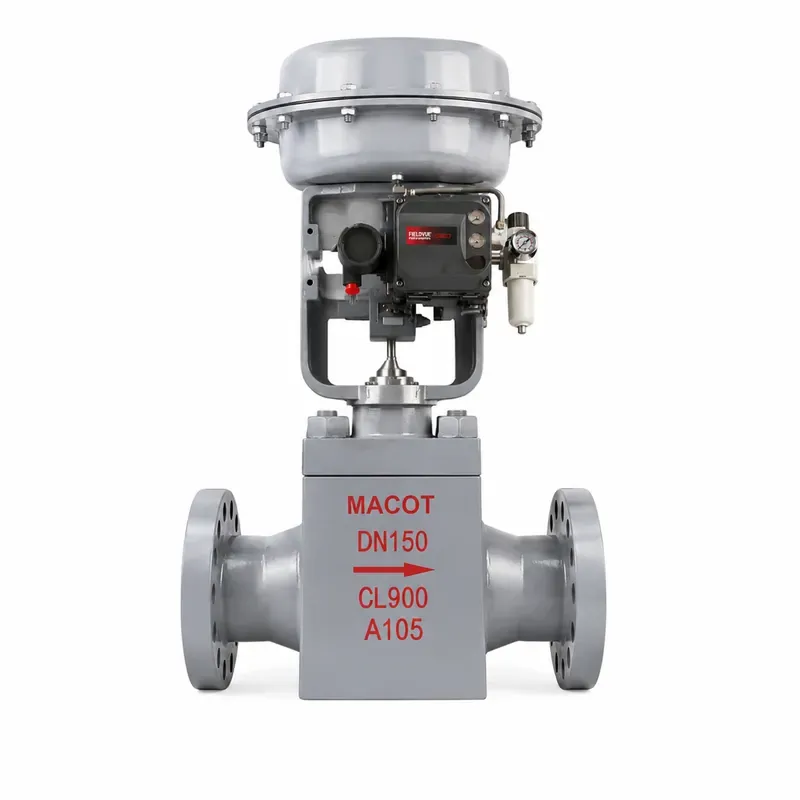
WCB and A105 have similar minimum room-temperature tensile and yield requirements, but WCB is a casting grade and A105 is a forged carbon steel specification. The choice is tied to valve construction, size, geometry, manufacturing route, applicable design rules and purchase documents. Calling A105 the “equivalent” of WCB can create a material and traceability mismatch. The A105N forged-steel valve guide covers the forged product form and normalising condition in more detail.
WCB versus WCC
WCC has a 275 MPa minimum yield strength, compared with 250 MPa for WCB. It also uses different carbon and manganese limits. That difference may support a design choice, but pressure class still belongs to the complete valve design and pressure-temperature rating.
WCB equivalents are cross-references, not automatic substitutes
A cross-reference can help identify a candidate grade, but it does not approve a substitution. The common comparisons have different limits:
- UNS J03002: identifies WCB within the UNS system but does not replace the ASTM A216/A216M requirements.
- EN GP240GH, material number 1.0619: is often cross-referenced to WCB, but the EN standard controls its own chemistry, mechanical properties, heat treatment and testing.
- JIS SCPH2: is another common cross-reference, not a universal one-for-one equivalent.
- ASTM A105: is forged rather than cast and should not be listed as an equivalent without that product-form warning.
Check a proposed substitution against the applicable editions of both material standards, the valve design code, pressure-temperature material group, MDMT, impact requirements, welding procedure, NDE scope and MTC format. Purchaser approval is still needed when the order names WCB.
Stainless grades such as CF8M and alloy grades such as WC6 or WC9 solve different corrosion or temperature problems. They cannot be selected from room-temperature strength alone.
Where WCB fits, where it does not, and what affects its price
Common general service
WCB is commonly specified for water, steam, oil, gas, air and neutral hydrocarbon service when carbon steel is chemically compatible and the temperature and pressure rating are satisfied. It is used in cast gate, globe, check, ball and other pressure-containing valve bodies. A cast steel gate valve is one typical construction in which the body may be specified as WCB.
Conditions that need another material review
WCB needs a different material review for acidic, chloride-bearing, saline, sour, strongly oxidising, erosive or solids-laden service. Low-temperature duty may require impact-qualified cast steel. Prolonged elevated-temperature duty may require Cr-Mo steel. Corrosive service may require stainless steel, duplex steel, nickel alloy, lining, overlay or another material system, depending on the actual chemistry and exposure.
The body grade cannot carry the whole compatibility decision. The bonnet, stem, closure member, seat, hardfacing, packing, gasket, bolting and coating have separate chemical, mechanical and temperature duties. A WCB body with unsuitable trim or packing is still an unsuitable valve.
What affects WCB valve price?
WCB normally has a lower base-material cost than stainless or chromium-molybdenum alloy castings. Finished-valve price is often driven more by casting weight and yield, valve size and class, wall thickness, heat treatment, machining, trim, NDE, impact testing, coating or lining, pressure testing and documentation.
A low unit price can hide a different inspection scope or certificate package. Compare quotations against the same material edition, supplementary requirements, NDE acceptance criteria, pressure-test standard, trim specification and document list.
How to verify a WCB valve body
Verification starts by linking the body marking to the correct heat and certificate. A purchase review should follow the chain from valve identification to the casting heat number, MTC, manufacturing record and finished-valve documents.
 The raised WCB mark identifies the stated body grade, but it still needs to match the heat number and material certificate.
- Read the body and nameplate markings. Confirm WCB, the heat number or traceability code, nominal size, pressure class, manufacturer identity and applicable valve markings.
- Match the heat number to the MTC. The certificate should identify ASTM A216/A216M Grade WCB, actual chemical analysis, tensile results and heat-treatment condition.
- Check ordered supplementary requirements. Carbon equivalent, impact testing and additional examination are not automatic merely because the body is WCB.
- Confirm the inspection scope. Review the named NDE method, examined area, acceptance criteria, pressure-test standard and purchaser-approved deviations.
- Verify the complete bill of materials. Body WCB does not establish bonnet, trim, stem, seat, packing, gasket or bolting materials.
The valve markings guide explains how pressure class, size, material and traceability markings are read together.
Where carbon verification is required, use a suitable carbon-capable method such as optical emission spectroscopy, carbon-capable LIBS, or laboratory analysis under an approved procedure. The result still needs to be reconciled with traceability, heat treatment, mechanical testing and the applicable certificate. A correct chemistry reading from an untraceable component does not prove full ASTM A216 conformity.
Conclusion
WCB is a practical cast carbon-steel body grade when the service chemistry, MDMT, pressure-temperature rating and complete valve material system all fit the duty. Acceptance should rest on traceable markings, the heat-specific MTC and the required finished-valve records, not on the WCB letters alone.